

.png)
You Don’t Have to Fix Everything
How Guiding Instead of Solving Builds Kids Who Can Handle Life
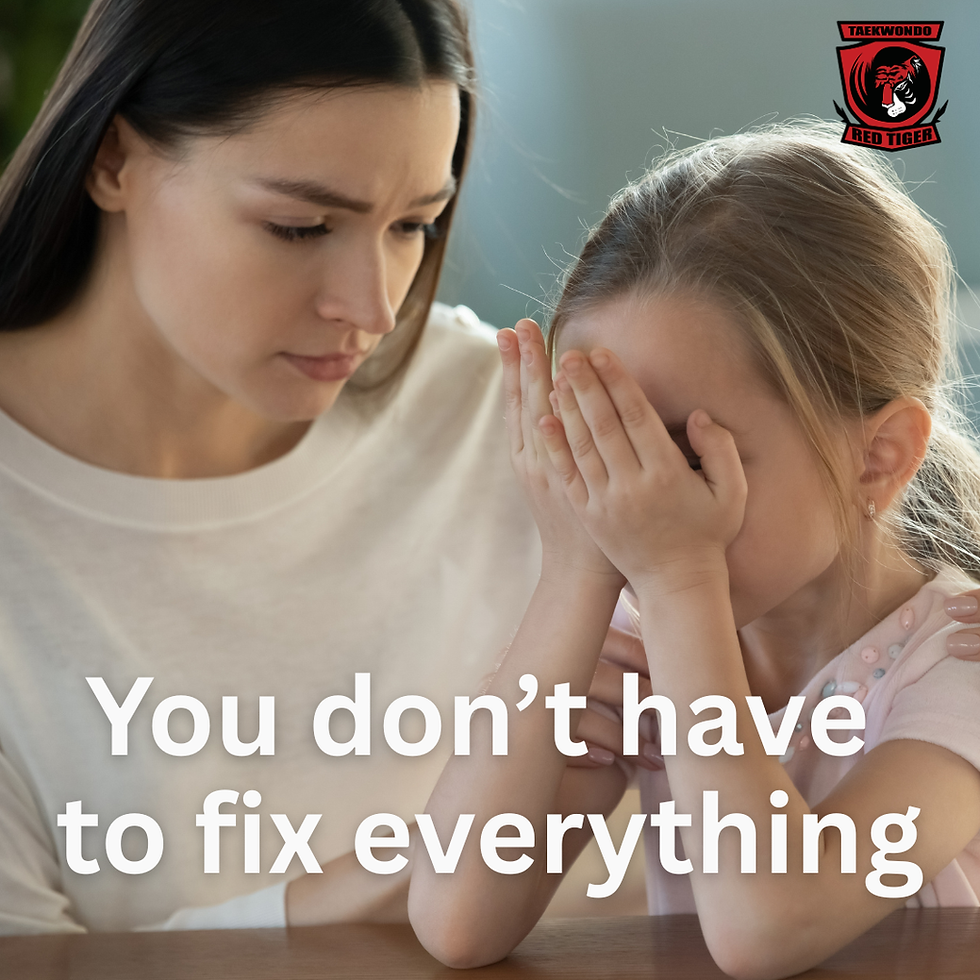
As parents, we want what’s best for our children. We want to protect them, comfort them, and make the hard things go away. So when our kids come home hurting , whether it’s a tough grade, getting left out of something, or saying “she’s not my best friend anymore” , every instinct we have says: fix it.
But what if that instinct, as loving as it is, is actually getting in the way of something more important?
Our Job Is to Guide, Not to Solve
Here’s what I’ve seen over and over working with kids of all ages: when we rush to solve every problem for them, we accidentally send a message we never intended. We teach them that hard things need to be removed , not worked through.
As parents, our job isn’t to eliminate the hard moments. It’s to guide our kids through them so they can start building their own solutions , solutions that make sense for where they are right now, developmentally and emotionally.
A 7, year, old doesn’t need an adult, level answer. They need just enough support to take the next small step on their own. A 10, year, old navigating friendship drama doesn’t need us to call the other parent. They need us to help them think through their options and then trust them to choose.
What Age, Appropriate Guidance Looks Like
Every child is different, and what “guiding” looks like will shift as they grow. But the principle stays the same: meet them where they are and help them take the next right step , not the step you’d take for them.
For younger school, age kids (6–8), it might look like sitting with them in the feeling first. “That really hurt your feelings, didn’t it?” goes a long way before any problem, solving even begins. Once they feel heard, then you can gently ask: “What do you think you could do?”
For older kids (9–12), it might look like resisting the urge to map out a five, step solution and instead asking: “What do YOU think you want to do about it?” Then listening. Then maybe offering one or two options if they’re stuck , not a lecture, not a rescue.
The goal is always to hand the ownership back to them, at the right level for their age.
Why This Matters More Than We Think
When children learn that they can work through hard things, something powerful happens. They stop feeling like life just happens to them. They start realizing they have the ability to shape what comes next.
That lesson, I can handle this, doesn’t just apply to the friendship drama or the bad grade. It stays with them. They’ll carry it into middle school, into high school, into the workplace, into their relationships as adults.
The child who learns “I can get better at this” becomes the adult who faces obstacles with confidence instead of shutting down. And that is one of the greatest gifts we can give them.
A Final Thought for Parents
None of this means stepping back and doing nothing. It means being intentional about when and how you step in.
Be the safe place they come to. Be the one who sits with them in the hard moment. Ask the question that helps them think. And then trust them — because they are more capable than we sometimes give them credit for.
Progress, not perfection. For them — and for us as parents too.


Comments